You are here: Agents in an Osy# app › What you can build
Summary#
Start with the smallest thing that would help, and grow. Each kind below contains the one before it. An app that starts as the first can become the fourth without being rewritten.
Description#
1. An assistant for one person#
A curator at a small museum opens a piece in the collection and asks for its label. An [[agent-guide-glossary#agent|agent]] reads the catalogue entry and writes the two sentences a visitor will read. The curator sees the label, and a link to how it was written.
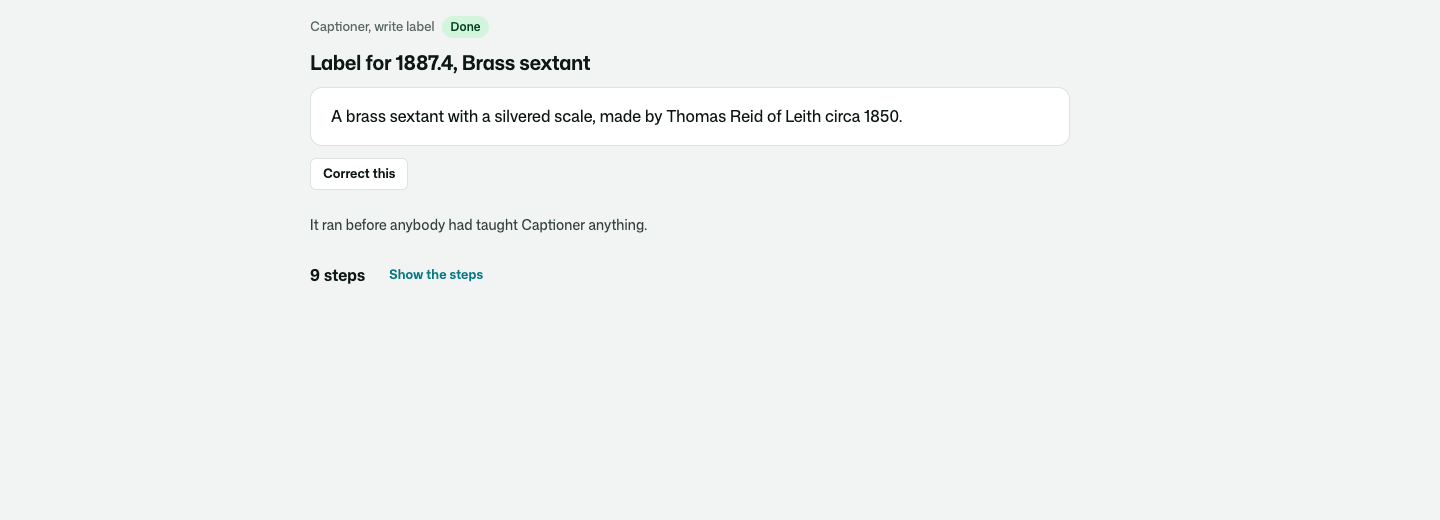
The agent's work for one person: what was asked, what came back, and a way to say it was wrong.
Who decides what: the person asks, and reads the result. The agent only does things that person could have done themselves.
Good for: drafting, summarising, looking things up across the app, filling in what is tedious.
For developers: Shape 1 — an assistant for one person.
2. Work done for people, with approvals#
A buyer asks an agent to vet a new supplier. The agent looks the company up and notes what it finds. Then it wants to clear the supplier to trade. That is not the agent's to do alone, so it proposes it. The [[agent-guide-glossary#proposal|proposal]] lands in a person's [[agent-guide-glossary#inbox|inbox]] with what will happen, to whom, and what the agent looked at.
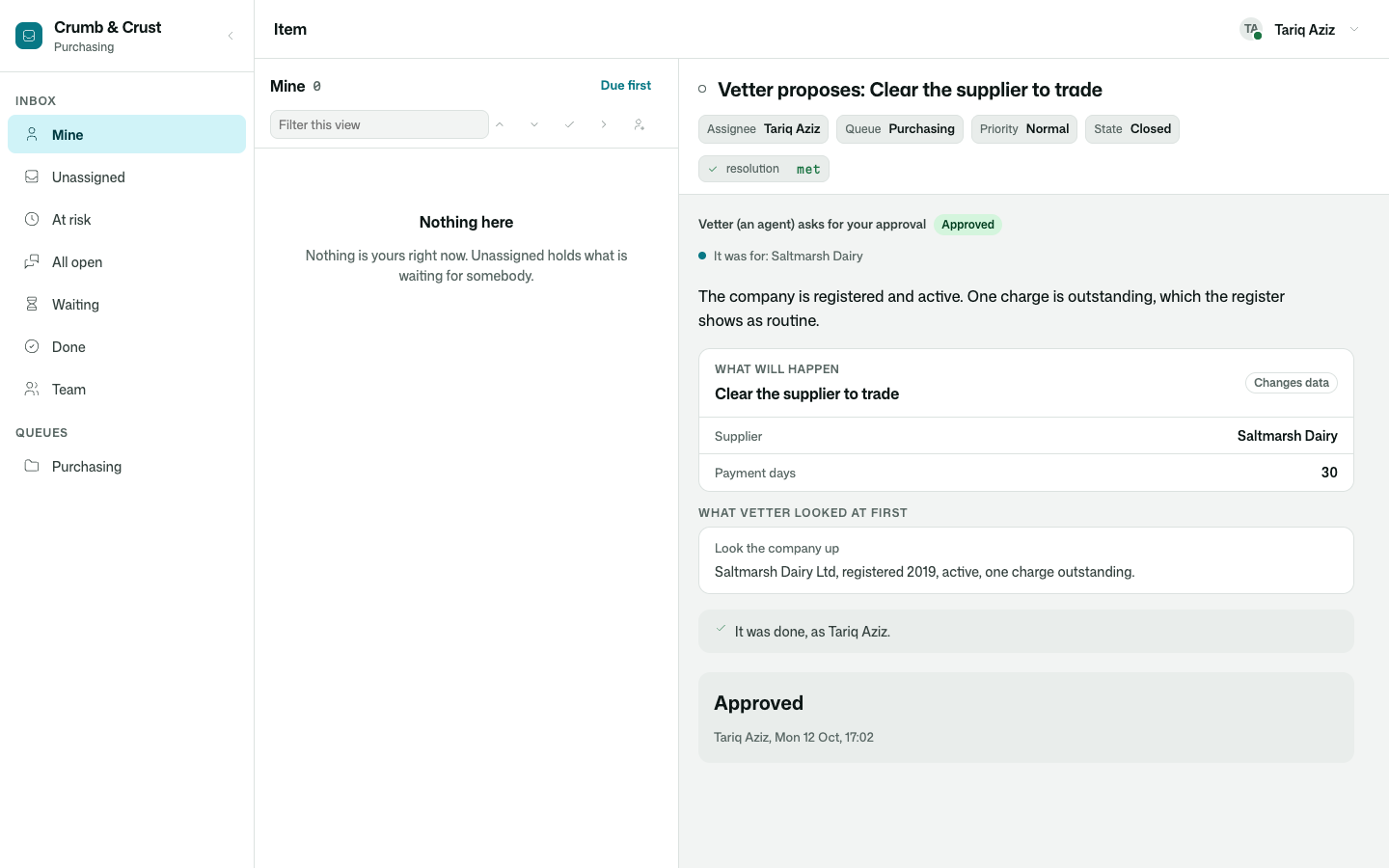
After the yes: "It was done, as Tariq Aziz." The agent did the work; the decision carries a person's name.
Who decides what: the app says, tool by tool, what the agent does alone and what it must propose. A person approves or rejects. A rejection needs a reason, and the agent is given it.
Good for: anything where the looking-up is most of the work and the decision is small but must be a person's: clearing, refunding, pricing, sending.
For developers: Shape 2 — work done for people, with approvals.
3. Agents inside a business process#
A tool maker qualifies every new supplier the same way: check the documents, assess the risk, settle the terms, approve. The steps are fixed, and a qualification takes days because people are involved. Agents do the reading steps. When an agent cannot finish, the process sends that step to a person instead.
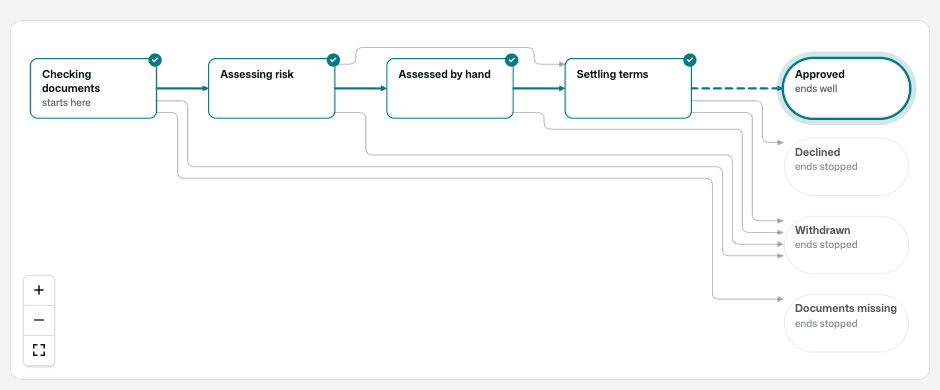
One qualification, drawn by the app itself. The heavy line is the way this one went: its risk was assessed by hand, because the agent that should have done it could not finish.
Who decides what: the process decides the order. Each agent does one step. People do the steps that are theirs, and take over the ones an agent could not do.
Good for: onboarding, claims, returns, applications: anything with steps, waiting and several people.
For developers: Shape 3 — agents inside a business process. The whole story: A supplier is qualified — five days, four agents, one that failed, and a three-day wait.
4. A team of agents, with one in charge#
Qualifying a dairy is really three jobs: are its finances sound, is its food safety good enough, are its terms acceptable. One agent is in charge. It hands the three jobs to three specialist agents at the same time, and decides from what comes back.
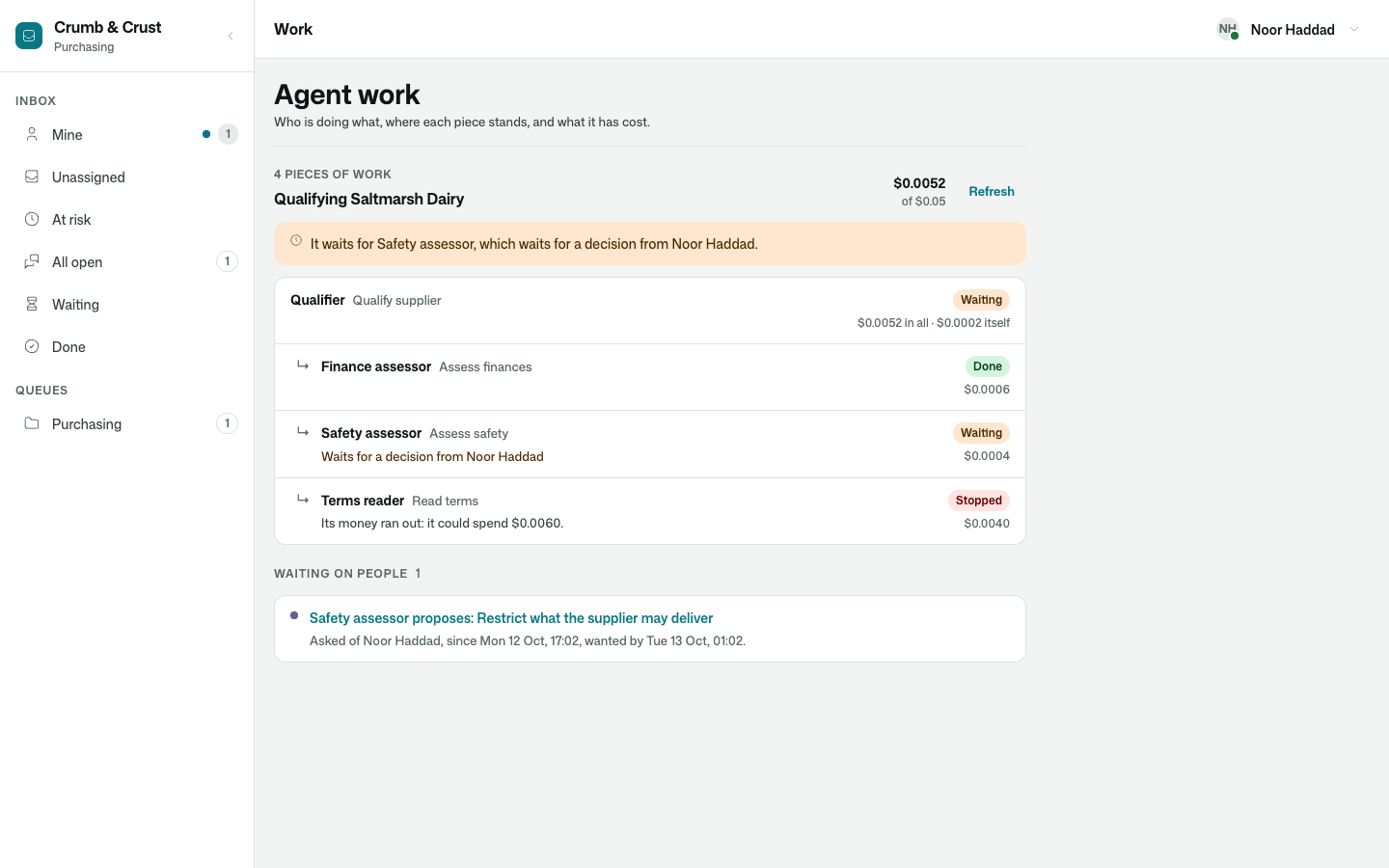
One specialist is done. One waits for a person's decision, so the agent in charge waits too. One was stopped: its share of the money ran out, and the others carried on.
Who decides what: the app says which specialists an agent may use. A specialist never gets more rights or more money than the agent that handed it the job.
Good for: jobs with parts that need different knowledge or different permissions.
For developers: Shape 4 — a team of agents with a coordinator. The whole story: Two suppliers for a bakery group — a week's wait, an outsider's answer, and one agent directing three.
And when nobody can write the steps down?#
Some work has a clear outcome and no fixed way to get there. A customer's parcel has not arrived: the shop owns that until the customer has the parcel or their money back. In Osy# that is an assignment. It says what "done" means, and agents, people and processes are attached to it as the work goes on. It can be closed, and opened again.
The whole story: A parcel that never came — a case owned until it is right, closed, and opened again.
What to read next#
- What a person sees — the screens of an app with agents in it — the screens, as people meet them
- What stays under people's control — ten promises, and where each is shown — what stays under people's control
- A supplier is qualified — five days, four agents, one that failed, and a three-day wait — the third kind, told day by day
Go deeper#
- Deciding what to build — four shapes of app with agents in it — for developers: how to tell which kind an app is
- Glossary — the words the Agents guide uses — the words, explained